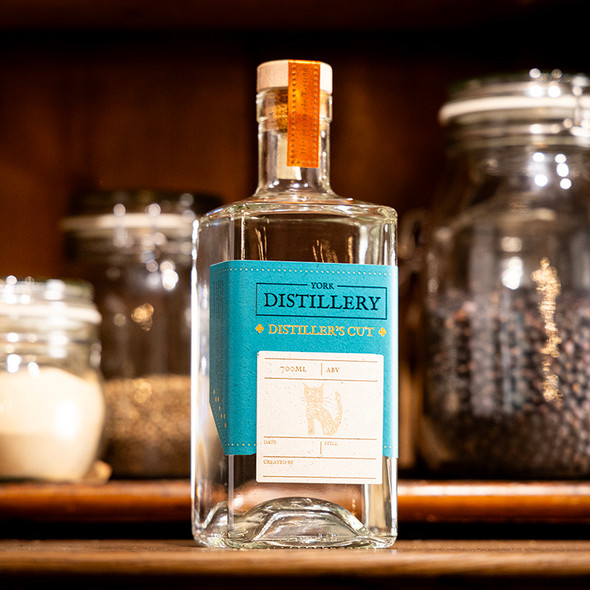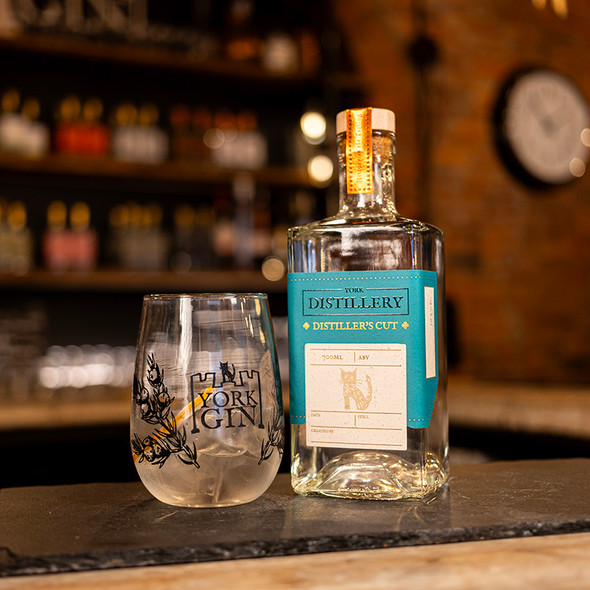


More about this unique Distiller's Cut gin - LIMITED EDITION
Tasting Notes
Ripe, jammy plum leads over the soft sweetness of fig, while ginger adds a warm, peppery kick. Underneath runs a thread of clove, cinnamon and nutmeg from the allspice.
About This Small-Batch Gin
This Distiller's Cut gin was created at our boutique York Distillery - a home of York Gin - within the city walls. Small quantities of plums, figs, ginger and allspice were distilled individually in our mini copper stills, allowing us to truly understand the character of each flavour.
We then blended these distillates into our gold-award-winning London Dry gin by hand, measure by measure, and added a small amount of sugar syrup, until the whole came into balance. Ripe plum leading, with fig, ginger and allspice each playing supporting roles.
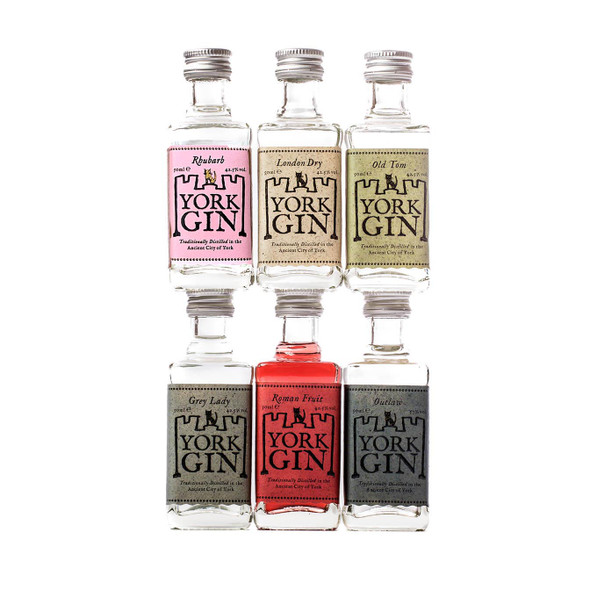
Our Distiller's Cuts take more time to make than the permanent York Gin range. Every ingredient is distilled separately, every distillate is tasted individually, and the blend is built by hand and adjusted until we reach what we consider to be perfection. The extra effort and time explains why each Distiller's Cut is made in very small batches - and appears only for a very limited season.
Details
- ABV: 45%
- Size: 70cl
- Lightly sweetened, with a small amount of sugar syrup
Distilled for Christmas
For this Sugar Plum gin, we distilled four festive ingredients at York Distillery: plums picked in a Yorkshire garden, figs, ginger and allspice.
Together they capture the essence of a Christmas table. Ripe, jammy plum leads over the soft sweetness of fig, while ginger adds a warm, peppery kick. Underneath runs a thread of clove, cinnamon and nutmeg from the allspice.
Perfect Serves
Gin & Tonic: This gin makes a fabulously festive G&T. Use large ice cubes so they melt slowly, and a premium light or Mediterranean tonic. Garnish with a slice of plum or a strip of orange peel.
Plum Collins: Half-fill a tall glass with ice. Add a double measure of gin, fresh lemon juice to taste, then top with soda and stir. Garnish with lemon and a cherry or a slice of plum. This gin is already lightly sweetened, so there is no need for sugar syrup.
Sugar Plum Spritz: A sparkling, festive serve. Add a measure of gin to a flute, top with chilled sparkling Champagne, Cava or Prosecco. Garnish with a festive fruit.
More festive drinks to try with Sugar Plum Gin
Plum & Ginger Sipper: Pour a measure or two of gin over ice. Top with ginger beer, and garnish with a slice of plum.
Sugar Plum Hot Gin: Add a measure of gin to a mug of hot apple juice and stir. Garnish with a cinnamon stick and an orange peel strip.
Neat: Serve a small measure alongside a cheese board with figs, and let guests identify the spices!
History in the Tasting: Sugar Plums
Before its association with Christmas, a Sugar Plum was a sweet for the wealthy - and had nothing to do with plums!
A caraway seed or almond was coated in layers of sugar - a process that could take days before the advent of sweet factories. Having a mouthful of sugar plums meant to speak sweetly, and 'plum' came to mean something pleasing.
During the 19th Century, a poem about Christmas Eve and a ballet suite created the association of the Sugar Plum and Christmas we know and love today.
The anonymous 1823 poem 'Twas The Night Before Christmas created the image of sugar plums dancing through the heads of sleeping children on Christmas Eve.
And in 1892, Tchaikovsky's Nutcracker Suite introduced the Sugar Plum Fairy to the world - using the celesta (a bell-like instrument) to create the unmistakeable festive sound to accompany the fairy's Christmas Eve dance.
This Distiller's Cut uses real plums, picked in a Yorkshire garden.
More Details of the Botanicals
Plum (Prunus domestica, rose family, Rosaceae): The very heart of this gin. Ripe, jammy fruit, picked in season in a Yorkshire garden. The plum's close relatives include the greengage and the damson. Plum trees belong to the genus Prunus, Latin for plum tree. The plum grown in Britain is thought to be a natural cross between the cherry plum and the sloe. The damson takes its name from 'plum of Damascus'. The Romans may have been the first to bring named plum varieties to Britain.
Fig (Ficus carica, mulberry family, Moraceae): Soft, rich fruit with a gentle sweetness, a favourite on the festive cheeseboard. What looks like the fruit is really a flower turned inside out, with the tiny flowers hidden inside. Botanically, a fig is not a fruit. It is a cluster of tiny flowers growing inside a soft case, which is why a fig tree never seems to blossom. Figs are among the oldest cultivated plants, with evidence of them being grown in a Neolithic settlement in the Jordan Valley. Aristotle (384-322BC) also wrote about them.
Ginger (Zingiber officinale, ginger family, Zingiberaceae): A warm, peppery kick, reminiscent of gingerbread. The part we use is the root, though botanically it is an underground stem, known as a rhizome. Our ginger distillate is punchy, so a little goes a long way. Ginger had reached the Mediterranean by the 1st Century AD. By the Middle Ages, it was an expensive treat, often enjoyed at celebrations. Ginger cakes were fashionable in England from at least the 15th Century, and became especially popular in Yorkshire in the 1700s.
Allspice (Pimenta dioica, myrtle family, Myrtaceae): Warming clove, cinnamon and nutmeg notes, like mulled wine and mince pies. Allspice is not a blend: it is the dried berry of a single evergreen tree from the Caribbean, named because it tastes of several spices at once. Also known as: Jamaica pepper or pimento. Europeans first met allspice in Jamaica, on Columbus's second voyage. The Spanish took it for pepper, which is why its botanical name is Pimenta. The English named it allspice, a name recorded by 1621, because one berry tastes of cinnamon, nutmeg and clove. For a long time it grew only in Jamaica, where birds spread the seeds, and the wood of the tree is used in smoking meat and fish.